Jana Crosby
The Journey CollectionJana Crosby is a fifth-grade student and Max McCoy’s childhood romantic interest. Although she remains mostly offstage, her repeated appearances give shape to Max’s developing independence, social confidence, and capacity for attachment. Jana is first presented as the auburn-haired girl beside whom Max stands nervously at a school dance; later, she becomes the person he calls his girlfriend, the inspiration for his marriage declaration, a participant in Travis McCoy and Penelope Stone’s wedding, and the absent companion invoked whenever Max encounters something beautiful.
Identity and Introduction
Jana enters the story through Travis McCoy’s amused, affectionate perspective at a school dance attended by fourth- and fifth-grade students and their parents. Amid balloons, streamers, food, and children divided into shy boys and teasing girls, Travis searches for Max and nearly chokes with surprise when he sees his son standing beside a little girl with dark auburn hair. Penelope identifies the girl as Jana Crosby, a fifth grader, and observes that Max appears to have a crush on her. The introduction establishes Jana less through biography than through her effect on Max: his nervous fingers move through his hair, and his usually self-possessed parents immediately recognize that he is emotionally exposed.
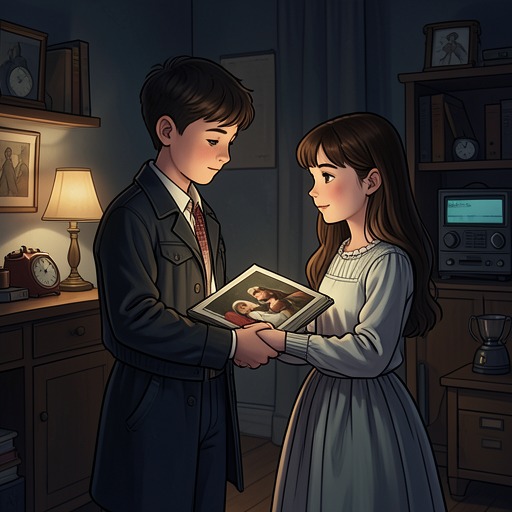
Jana’s first substantial scene gives her an active role in Max’s attempt to cross that emotional distance. When the music begins and the children hesitate, Max closes his eyes, gathers his courage, and holds out his hand. Jana blushes but accepts, allowing him to lead her onto the dance floor. Because the song is upbeat, the pair can shuffle from side to side rather than face the greater intimacy of a slow dance. Her response is modest but decisive: she does not merely receive Max’s attention; she answers it and makes his public act of courage successful.
Max’s First Courtship
For the next three hours, Max tries to woo Jana in the simple, highly visible language available to ten-year-olds. He gets her punch, holds her hand, and attempts a small gesture of tenderness by brushing her hair away from her face. Jana’s parents, Mark and Heather, watch with amusement. Mark briefly tenses at the gesture, while Heather places a calming hand on his shoulder and reminds the situation through her reaction of the children’s age and innocence. Jana therefore becomes the center of a comic family tableau in which adult protectiveness meets the harmless seriousness of childhood affection.
At the end of the dance, Max insists on walking Jana to her parents’ car. Travis McCoy and Penelope Stone follow with Jana’s parents, trying not to gush when Max once again holds her hand. The scene extends Max’s courtship beyond the dance floor: he performs a small act of escort and responsibility while the adults observe from the edges. On the silent drive home, Max cannot stop smiling. Before leaving the car, he shocks both parents by declaring, “I’m gonna marry Jana one day.” His certainty is disproportionate to his age, but the statement makes Jana important not because the narrative confirms a future marriage, but because she gives Max his first confident language for imagining one.
Continuing Relationship and Family Context
Years later, Max still describes Jana as his girlfriend. By the time Travis McCoy picks him up from junior high, Max and Jana have been “dating” for two years, although Travis questions how the term can apply when neither child is old enough to go anywhere alone. Max dismisses the objection by explaining that it is merely a figure of speech. The exchange preserves the comic distance between adult definitions and childhood experience while confirming that Jana is not a one-evening infatuation. She has remained a stable presence in Max’s life and vocabulary.
Jana’s presence also tests Max’s parents’ patience in ordinary domestic moments. When Travis arrives at the school, Max is standing beside Jana instead of being ready to leave. He answers Travis, then turns back to Jana and says something that makes her laugh. She brushes her long auburn hair over her shoulder and smiles at him, while Travis feels his stomach ache and calls again for Max to hurry. The moment is small, but it shows Max’s priorities shifting toward a peer relationship that he values independently of parental schedules. Jana’s laughter and smile are enough to delay him, and Travis must confront the fact that his son’s emotional world is expanding beyond the family home.
Penelope Stone later recalls that Max was always outgoing, even as a young child: he would run away from her in grocery stores because he saw everyone as a friend and did not understand the danger posed by strangers. Travis answers that little has changed, since Max remains the first child to approach a new student. Penelope extends the observation by teasing Travis about the boy who “sneaks into the pep rally after it’s over,” linking Max’s openness to the circumstances of Travis and Penelope’s own renewed relationship. Jana belongs to the same pattern of openness. Max approaches her, risks embarrassment, and treats connection as something worth initiating rather than fearing.
Jana in the McCoy Family’s Milestones
Jana becomes connected to the family’s major rituals when she helps at Travis McCoy and Penelope Stone’s wedding. She follows Cody Holland’s escort of Wanda Stone and Nadine, scattering rose petals as she walks down the aisle. Wearing a vibrant blue sundress and a small crystal tiara in her auburn hair, she is described as resembling a fairy princess. The image places Jana within the wedding’s carefully arranged passage from childhood play into adult commitment, but it also keeps her identity distinct: she is not merely Max’s guest, but a child with her own ceremonial role and visible place in the community.
Her connection to the wedding is personal as well as decorative. Reverend Kevin Brown agrees to perform the ceremony partly because Jana, his granddaughter, begs him to do it. Travis McCoy and Penelope Stone know that the reverend would have married them regardless, yet Jana’s plea amuses them and helps bind the ceremony to the children’s social world. Jana’s presence thus helps bridge Max’s youthful attachments and the adults’ family formation. The wedding does not erase childhood relationships in favor of adult romance; it incorporates them into the new family structure.
At the ceremony, Max stands between Travis and Penelope when the couple lights the eternity candle together as a family. Jana’s earlier role as the girl Max courts and her later role in the wedding frame his development within a larger pattern of belonging. She is not part of the marital union, but she is among the relationships that make Max’s emotional life legible and that give the family celebration its communal texture.
Symbolic and Narrative Significance
Jana’s importance lies in recurrence rather than narrative centrality. She is a minor character, but her appearances mark stages in Max’s growth: first the nervous boy who needs courage to offer a hand, then the child who confidently imagines marriage, later the boy who claims a continuing relationship, and finally the adolescent whose attachment remains an accepted part of family conversation. Her role is developmental, showing that Max’s emotional education happens through ordinary acts of approach, embarrassment, loyalty, and public affection.
Jana also remains present when she is absent. At a later gathering, Max looks up at the night sky and says that the stars are beautiful and that Jana would like them. He explains that she loves the night sky and says the stars remind her of diamonds, adding that he thinks she would like the scene before him as well. This remembered preference turns Jana into a measure of Max’s attention: he experiences beauty not only for himself but by imagining how it would reach someone he cares about. The childhood crush has therefore become a continuing imaginative bond, linking Jana to Max’s developing ability to share wonder.
The narrative treats Jana’s relationship with Max as innocent, humorous, and emotionally meaningful without promising that it will become permanent. Her function is to make visible the first form of romantic attachment in Max’s life and to show how seriously a child can inhabit a feeling even when adults recognize its limits. Through Jana, Max learns to initiate intimacy; through Max, Jana becomes part of the McCoy family’s story of affection, maturation, and belonging.